

Marketing SEO Explained: What It Is & Why It Matters for Effective Digital Growth
In the digital landscape, understanding SEO marketing is crucial for businesses aiming to enhance their online presence. SEO, or Search Engine Optimization, involves strategies and techniques designed to improve a website’s visibility on search engines. This article will delve into the core concepts of SEO marketing, its significance, and how it can drive effective digital growth. Many businesses struggle with low visibility and engagement online, which can hinder their growth potential. By implementing effective SEO strategies, companies can increase their organic traffic and establish a strong brand authority. We will explore the definition of SEO marketing, its benefits, the step-by-step process of implementation, various types of SEO, practical strategies for small businesses, and future trends in the field.
What Is SEO Marketing? Definition and Core Concepts
SEO marketing refers to the practice of optimizing a website to rank higher in search engine results, thereby increasing its visibility to potential customers. This process involves various techniques, including keyword research, content creation, and technical optimization, all aimed at improving a site’s relevance and authority in the eyes of search engines. The primary goal of SEO marketing is to attract organic traffic, which is often more valuable than paid traffic due to its higher conversion rates.
How Does SEO Marketing Differ from Other Digital Marketing Channels?
SEO marketing stands apart from other digital marketing channels, such as pay-per-click (PPC) advertising and social media marketing, primarily due to its focus on organic search results. Unlike PPC, which requires ongoing investment for visibility, SEO aims to build long-term authority and relevance, leading to sustainable traffic growth. Additionally, while social media marketing relies on engagement and shares, SEO focuses on optimizing content for search engines, ensuring that it meets user intent and search algorithms.
What Are the Key Components of SEO Marketing?
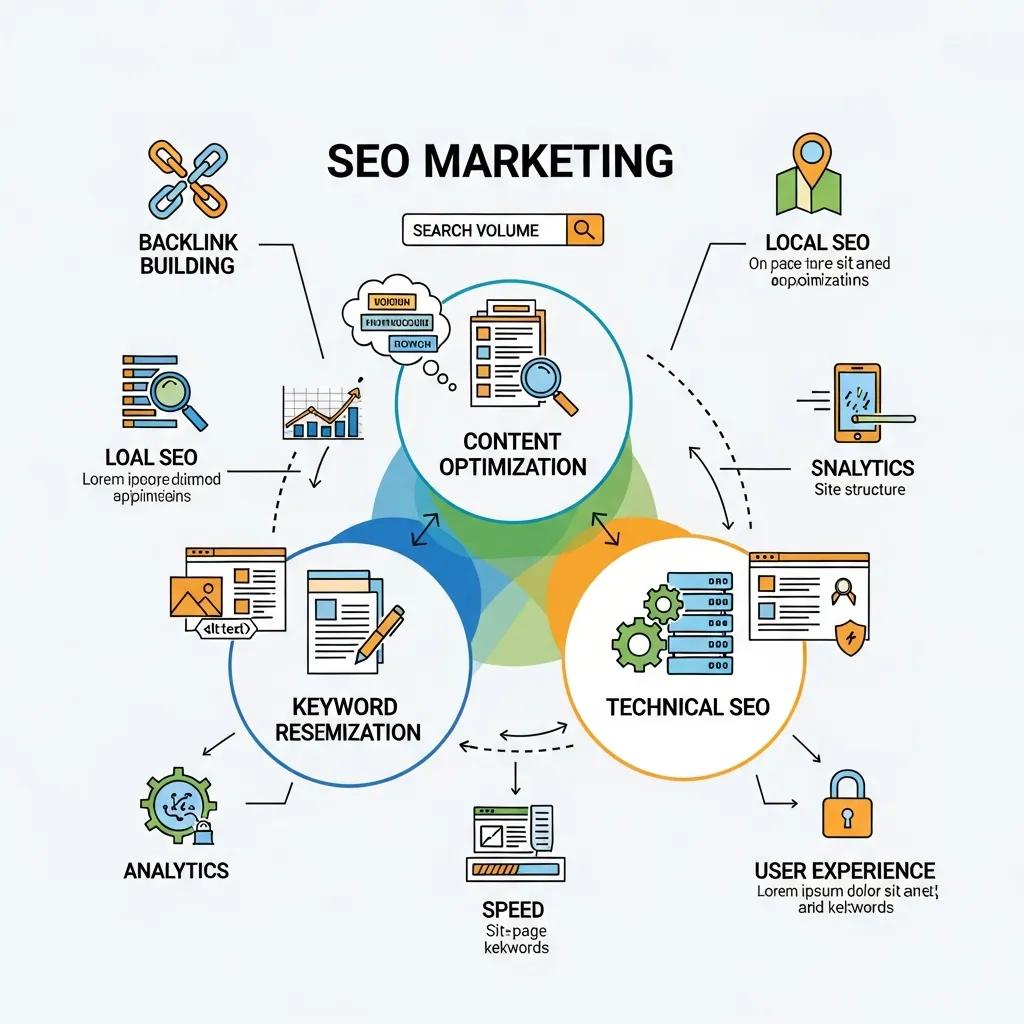
The key components of SEO marketing include:
- Keyword Research: Identifying the terms and phrases that potential customers use to search for products or services.
- Content Optimization: Creating high-quality, relevant content that addresses user needs and incorporates targeted keywords.
- Technical SEO: Ensuring that a website is structured correctly for search engines to crawl and index it efficiently, including aspects like site speed, mobile-friendliness, and secure connections (HTTPS).
This foundational aspect of SEO is further elaborated by experts who emphasize the critical role of crawling and indexing for a website’s visibility.
Crawling & Indexing: The Foundation of SEO Ranking
This is where SEO begins. Search engine robots need to crawl a website’s pages to find all the information contained on those pages. Once crawled, robots then process and store the information from the website in the search engine’s index. If robots are unable to crawl or index a website’s pages, the website may not rank in search results. Achieving optimal SEO performance requires understanding how search engine robots work and ensuring that robots are able to crawl and index a website effectively.
Crawling and Indexing, 2023
These components work together to enhance a website’s visibility and ranking on search engines.
Why Does SEO Marketing Matter? Benefits and Business Impact
SEO marketing is essential for businesses looking to thrive in the competitive digital landscape. It not only increases visibility but also builds brand authority and trust among consumers. By optimizing their online presence, businesses can attract more organic traffic, leading to higher conversion rates and ultimately, increased revenue.
How Does SEO Marketing Increase Visibility and Brand Authority?
SEO marketing enhances visibility by ensuring that a website appears at the top of search engine results for relevant queries. This increased visibility translates to more clicks and visits, which can significantly boost brand awareness. Furthermore, appearing on the first page of search results establishes credibility and authority, as users tend to trust websites that rank higher. Research shows that over 70% of users click on organic search results, highlighting the importance of effective SEO strategies.
What Is the Return on Investment of SEO Marketing?
The return on investment (ROI) of SEO marketing can be substantial. Unlike paid advertising, which ceases to generate traffic once the budget is exhausted, SEO efforts can yield long-term benefits. Successful SEO campaigns can lead to a consistent flow of organic traffic, reducing the need for ongoing ad spend. Businesses that invest in SEO often see a higher ROI compared to other marketing channels, making it a cost-effective strategy for growth.
How Does SEO Marketing Work? Step-by-Step Process Explained
Implementing SEO marketing involves a systematic approach that includes several key steps. Understanding this process is vital for businesses aiming to enhance their online presence effectively.
What Is the Role of Keyword Research in SEO Marketing?
Keyword research is the foundation of SEO marketing. It involves identifying the specific words and phrases that potential customers use when searching for products or services. By understanding these keywords, businesses can tailor their content to meet user intent, ensuring that it aligns with what users are actively searching for. Tools like Google Keyword Planner, SEMrush, and Ahrefs can assist in discovering high-traffic keywords relevant to a business’s niche.
How Do Content Creation and Optimization Drive SEO Success?
Content creation and optimization are critical for driving SEO success. High-quality, relevant content that addresses user needs not only attracts visitors but also encourages them to stay longer on the site, reducing bounce rates. Optimizing content involves incorporating targeted keywords naturally, using engaging headlines, and ensuring that the content is structured for readability. Additionally, regularly updating content can signal to search engines that a website is active and relevant, further enhancing its ranking potential.
What Are the Different Types of SEO Marketing? On-Page, Off-Page, Technical, and More
SEO marketing encompasses various types, each playing a unique role in enhancing a website’s visibility and authority.
How Does On-Page SEO Enhance Website Content and Structure?
On-page SEO focuses on optimizing individual web pages to improve their ranking in search results. This includes optimizing title tags, meta descriptions, headers, and content for targeted keywords.
Additionally, on-page SEO involves ensuring that the website’s structure is user-friendly, with clear navigation and internal linking. By enhancing the content and structure of a website, businesses can improve user experience and increase their chances of ranking higher in search results.
What Are Off-Page SEO Strategies Like Backlink Building?
Off-page SEO refers to actions taken outside of a website to improve its ranking. One of the most effective off-page strategies is backlink building, which involves acquiring links from other reputable websites. Backlinks serve as endorsements, signaling to search engines that a website is credible and authoritative.
Strategies for building backlinks include guest blogging, influencer outreach, and creating shareable content that naturally attracts links.
How Can Small Businesses Use SEO Marketing Effectively? Practical Strategies and Examples
Small businesses can leverage SEO marketing to compete effectively in their respective markets. By implementing budget-friendly strategies, they can enhance their online visibility without incurring significant costs.
What Budget-Friendly SEO Marketing Tactics Are Best for Small Businesses?
Small businesses can adopt several budget-friendly SEO tactics, including:
- Local SEO: Optimizing for local search queries by creating a Google Business Profile and encouraging customer reviews.
- Content Marketing: Producing valuable content that addresses customer pain points and incorporates relevant keywords.
- Social Media Engagement: Sharing content on social media platforms to drive traffic back to the website and increase brand awareness.
How Does Local SEO Benefit Small Business Growth?

Local SEO is particularly beneficial for small businesses, as it targets customers in specific geographic areas. By optimizing for local search terms and ensuring that their business information is accurate across online directories, small businesses can increase their visibility to local customers. This targeted approach can lead to higher foot traffic and sales, making local SEO a vital component of a small business’s marketing strategy.
What Are the Future Trends in SEO Marketing? AI, Voice Search, and Algorithm Evolution
As technology evolves, so do the strategies and techniques used in SEO marketing. Staying informed about future trends is essential for businesses looking to maintain a competitive edge.
How Is Artificial Intelligence Changing SEO Marketing?
Artificial intelligence (AI) is transforming SEO marketing by enabling more sophisticated data analysis and personalization. AI tools can analyze user behavior and preferences, allowing businesses to tailor their content and marketing strategies accordingly. Additionally, AI-driven algorithms are becoming increasingly adept at understanding natural language, making it essential for businesses to focus on creating high-quality, conversational content that resonates with users.
What Role Does Voice Search Play in Modern SEO Strategies?
Voice search is rapidly gaining popularity, with more users relying on voice-activated devices for their search queries. This trend necessitates a shift in SEO strategies, as voice searches tend to be more conversational and longer than traditional text searches. Businesses must optimize their content for voice search by incorporating natural language and focusing on answering common questions directly. This adaptation will be crucial for maintaining visibility in an increasingly voice-driven search landscape.
| SEO Component | Description | Importance |
|---|---|---|
| Keyword Research | Identifying relevant search terms | Foundation of SEO strategy |
| Content Optimization | Enhancing content for search engines | Increases visibility and engagement |
| Technical SEO | Ensuring website is crawlable and fast | Improves user experience and ranking |
SEO marketing is a multifaceted approach that requires a deep understanding of various components and strategies. By focusing on keyword research, content optimization, and technical SEO, businesses can enhance their online visibility and authority. As the digital landscape continues to evolve, staying informed about emerging trends and adapting strategies accordingly will be crucial for long-term success.