
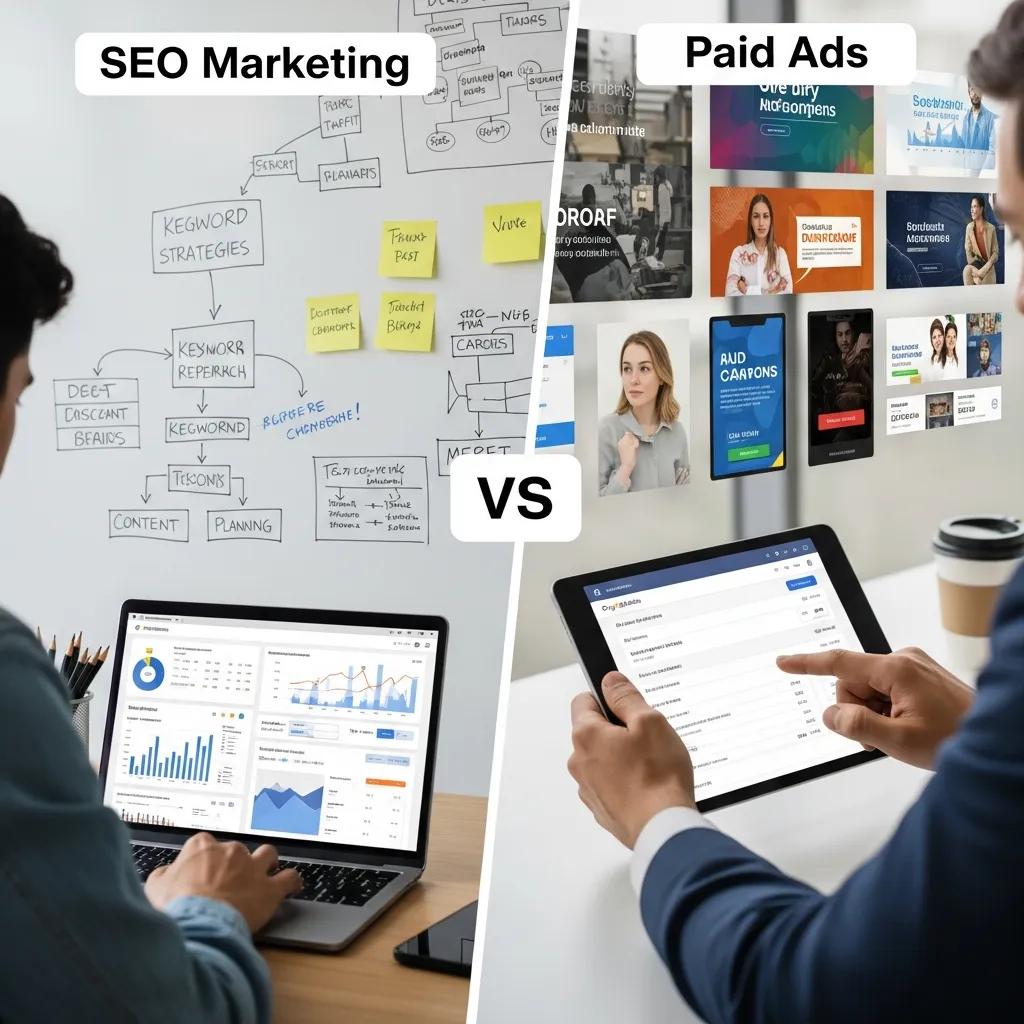
SEO Marketing vs Paid Ads: Which Digital Strategy Delivers Faster Results and Sustainable Growth?
In the dynamic and ever-evolving digital marketing landscape, businesses of all sizes frequently grapple with the critical decision of whether to primarily invest their valuable resources in SEO marketing or paid advertising campaigns. Both powerful digital marketing strategies offer distinct advantages and operate on different timelines for delivering measurable results. This comprehensive article will meticulously explore the fundamental differences between SEO marketing and paid ads, focusing intently on their respective effectiveness in generating quick leads, driving immediate traffic, and fostering long-term sustainable growth. By thoroughly understanding the intricate mechanisms and strategic nuances behind each approach, businesses can make highly informed decisions that precisely align with their overarching marketing goals, budget constraints, and desired outcomes. We will delve deeply into the core definitions, typical timeframes for impact, associated costs, and the crucial return on investment (ROI) linked with both strategies, providing a holistic and actionable overview to help you confidently choose the optimal path for your business’s online success and market presence.
What Is SEO Marketing and How Does It Drive Organic Traffic and Online Visibility?
SEO marketing, an acronym for search engine optimization, is the strategic and ongoing process of enhancing a website’s visibility and ranking on search engines like Google, Bing, and Yahoo through purely organic, unpaid search results. This multifaceted strategy involves a continuous effort to optimize various elements, including high-quality website content, improving the technical site architecture for better crawlability, and building authoritative backlinks from other reputable websites to increase overall relevance and domain authority. The paramount benefit of a robust SEO strategy is its unparalleled ability to drive consistent, sustainable organic traffic over an extended period, which inherently leads to higher conversion rates, enhanced brand loyalty, and a stronger online presence without direct per-click costs. Effective SEO ensures that your target audience can easily discover your products or services when actively searching for relevant information, making it a cornerstone of any successful digital marketing strategy.
How Does SEO Build Long-Term Brand Authority, Credibility, and E-E-A-T?

SEO plays a pivotal role in building long-term brand authority and credibility by systematically establishing a website as a trusted, expert source of information within its industry niche. When a site consistently ranks high in search engine results pages (SERPs) for relevant keywords, it inherently signals to users and search engines alike that the brand possesses significant expertise, authoritativeness, and trustworthiness (E-E-A-T). This crucial credibility is further enhanced through the creation of exceptional quality content, fostering strong user engagement through interactive elements, and delivering consistently positive user experiences. For instance, brands that strategically invest in comprehensive content marketing strategies, including blog posts, guides, and whitepapers, often observe a significant increase in trust and loyalty from their target audience, leading to valuable repeat visits, organic referrals, and a stronger market position. This sustained effort cultivates a reputation that transcends mere visibility, cementing the brand as a thought leader.
What Are the Typical Timeframes for SEO to Show Tangible Results and ROI?
The timeframes for SEO to show tangible and measurable results can vary significantly based on a multitude of influencing factors, including the level of industry competition, the difficulty of targeted keywords, the current state of the website’s SEO health, and the overall quality and consistency of the optimization efforts. Generally, businesses can realistically expect to see initial improvements in rankings and organic traffic within 4 to 6 months of dedicated SEO work, with more substantial and impactful results typically emerging after 6 to 12 months. This gradual, yet powerful, buildup of organic visibility and authority contrasts sharply with the immediate, but often temporary, visibility offered by paid ads. While SEO requires patience and consistent investment, its long-term benefits in terms of sustainable traffic and brand equity are often unparalleled, making it a strategic investment for enduring online success.
What Are Paid Ads and How Do They Provide Immediate Visibility and Targeted Traffic?
Paid ads, frequently referred to as pay-per-click (PPC) advertising, involve strategically purchasing ad space on prominent search engines (like Google Ads) or popular social media platforms (such as Facebook Ads, Instagram Ads, LinkedIn Ads) to gain immediate and highly targeted visibility. Advertisers meticulously bid on specific keywords or audience demographics relevant to their target market, and their ads are then displayed prominently at the top of search results, within social media feeds, or on various partner websites. The primary and most compelling advantage of paid ads is their remarkable ability to generate quick leads, drive immediate website traffic, and boost sales rapidly, making them an exceptionally attractive option for businesses seeking instant market penetration or looking to capitalize on time-sensitive promotions. Indeed, numerous industry studies and analytical reports consistently confirm that PPC and paid search campaigns are highly effective for immediate customer acquisition and achieving short-term revenue goals, offering unparalleled speed to market.
PPC and Paid Search: Impact on Customer Acquisition and Short-Term Revenue
Pay-per-click (PPC) and paid search advertising present distinctive challenges that can be addressed through analytical measurement and optimization practices. This systematic literature review examines the evaluation and efficacy of PPC and paid search strategies across varied industry and market contexts, assessing their impact on customer acquisition, short-term revenue, and marketing efficiency. The findings underscore the critical role of continuous monitoring and strategic adjustments in maximizing return on ad spend (ROAS) and achieving immediate business objectives.
Pay Per Click and Paid Search: Cost-Effectiveness and ROI in Digital Marketing, LA Maluleke, 2015
How Do Pay-Per-Click Campaigns Work to Generate Quick Leads and Conversions?
Pay-per-click (PPC) campaigns operate on an auction-based model, allowing advertisers to bid on specific keywords that their target audience is likely to use when searching for products or services. When users search for those keywords, the carefully crafted ads appear at the very top or bottom of the search results page, often above organic listings. Advertisers only incur a cost when a user actively clicks on their ad, making it a highly cost-effective and performance-driven way to drive qualified traffic directly to a landing page. Effective PPC campaigns demand meticulous keyword research, compelling and persuasive ad copy that resonates with the audience, and strategic landing page optimization to maximize conversion rates and ensure a strong return on ad spend (ROAS). Continuous A/B testing and performance monitoring are essential for refining campaigns and achieving optimal results in a competitive advertising landscape.
What Is the Typical Time to Results for Paid Advertising Campaigns?
The typical time to results for paid advertising campaigns is significantly shorter and more immediate compared to SEO. Businesses can often observe immediate traffic, generate new leads, and even secure sales within minutes to hours of launching a well-configured PPC campaign. This rapid deployment and instant visibility make paid ads an invaluable tool for urgent marketing needs, product launches, or seasonal promotions. However, the sustainability of these immediate results is directly dependent on ongoing investment and continuous optimization. Unlike SEO, which builds a lasting asset over time, paid ads require continuous funding and active management to maintain visibility, drive traffic, and sustain effectiveness. Once the budget is depleted, the visibility typically ceases, highlighting the need for consistent financial commitment.
SEO vs Paid Ads: What Are the Key Differences in Time, Cost, and ROI?
When meticulously comparing SEO and paid ads, several critical differences emerge across the dimensions of time investment, financial cost structures, and the ultimate return on investment (ROI). A thorough understanding of these distinctions is paramount for businesses to strategically allocate their marketing budgets, optimize their digital presence, and achieve their desired business objectives more effectively and efficiently.
How Do Cost Structures Differ Between SEO and Paid Ads Strategies?
The cost structures for SEO and paid ads strategies differ quite significantly, impacting budget allocation and long-term financial planning. SEO typically involves upfront costs for comprehensive content creation, technical website optimization, link building efforts, and ongoing maintenance and monitoring. However, once a strong organic ranking is established, organic traffic can continue to flow to the website without incurring additional costs per visitor or per click. In stark contrast, paid ads necessitate a continuous and often substantial investment, as advertisers must pay for each click (CPC) or impression (CPM) their ads receive. This ongoing expense can accumulate rapidly, especially in highly competitive markets where keyword bids are high, making budget management a critical component of PPC success. While SEO costs are often seen as an investment in a long-term asset, paid ad costs are more akin to an operational expense for immediate reach.
Which Strategy Offers Better ROI Over the Short and Long Term for Businesses?
In the short term, paid ads frequently provide a higher and more immediate ROI due to their instant visibility, rapid lead generation capabilities, and precise targeting options. Businesses can quickly test offers, validate markets, and drive sales within days or weeks. However, over the long term, SEO consistently demonstrates the potential to yield a superior and more sustainable ROI as organic traffic accumulates steadily without the continuous per-click costs associated with paid campaigns. Businesses that strategically invest in SEO can benefit from sustained, high-quality traffic, enhanced brand authority, and a lower cost per acquisition over time, making it a more cost-effective and valuable strategy for enduring business growth and market leadership. The compounding effect of SEO builds a digital asset that continues to deliver value long after the initial investment.
When Should Businesses Prioritize SEO or Paid Ads Based on Specific Goals?
The strategic choice between prioritizing SEO or paid ads, or indeed a combination of both, often hinges on a business’s specific marketing goals, current market position, and available resources. Understanding when to lean into each strategy can lead to significantly more effective marketing outcomes and a stronger competitive advantage in the digital arena.
What Scenarios Favor SEO for Sustainable Growth and Brand Building?
SEO is particularly advantageous and should be prioritized by businesses aiming for sustainable, long-term growth and robust brand building. Companies with strategic long-term objectives, such as establishing enduring brand authority, cultivating deep customer loyalty, and becoming an industry thought leader, should unequivocally prioritize SEO. This strategy is ideal for businesses that can commit the necessary time and resources into consistent, high-quality content creation, technical optimization, and strategic link building, as it leads to lasting organic visibility, a steady stream of qualified traffic, and a strong foundation for future expansion. SEO builds an evergreen asset that continues to deliver value over years, not just months.
When Are Paid Ads More Effective for Immediate Results and Market Entry?

Paid ads are undeniably more effective for businesses requiring immediate results, such as launching a brand-new product, promoting a time-sensitive sale, or quickly entering a new market. Through highly targeted PPC campaigns, companies can rapidly generate leads, drive instant website traffic, and secure sales, making this strategy exceptionally suitable for short-term goals and urgent revenue generation. Additionally, businesses looking to test new products, services, or market segments can significantly benefit from the rapid feedback and data insights that paid ads provide, allowing for quick iteration and optimization. Paid advertising offers unparalleled speed and control, making it the go-to choice for instant impact and measurable short-term performance.
How Can a Hybrid Digital Marketing Strategy Maximize Results and Synergy?
Combining the inherent strengths of both SEO and paid ads can forge a powerful and synergistic hybrid digital marketing strategy that maximizes overall results. By intelligently leveraging the immediate reach of paid advertising with the long-term sustainability of organic search, businesses can achieve both rapid visibility and build enduring brand authority, creating a comprehensive and resilient online presence.
How Does Paid Ads Data Inform and Enhance SEO Efforts and Content Strategy?
Data derived from paid ads campaigns can provide invaluable, real-time insights that significantly inform and enhance SEO strategies and content development. For instance, meticulously analyzing which keywords, ad copy variations, and landing pages drive the most conversions and engagement in PPC campaigns can directly help businesses optimize their organic content for those same high-performing keywords and user intents. This data-driven approach ensures that SEO efforts are precisely aligned with proven market demand and user behavior, enhancing overall effectiveness, improving keyword targeting, and accelerating organic growth. Paid ad data can reveal hidden opportunities and validate assumptions for SEO, creating a powerful feedback loop.
What Are Best Practices for Integrating SEO and Paid Ads for Optimal Performance?
Integrating SEO and paid ads for optimal performance requires careful planning, consistent execution, and continuous analysis. Best practices include coordinating campaigns to ensure consistent messaging and branding across both organic and paid channels, strategically allocating budgets effectively between both strategies based on performance and goals, and measuring combined performance metrics to assess overall impact and ROI. By aligning SEO and PPC efforts, businesses can create a cohesive and powerful marketing strategy that maximizes visibility, drives engagement, and captures a broader audience segment. This integrated approach ensures that both short-term gains and long-term growth objectives are met efficiently.
What Emerging Trends Affect SEO and Paid Ads Speed and Effectiveness in 2024?
The digital marketing landscape is in a constant state of flux, with emerging technological trends and evolving consumer behaviors continuously impacting the speed, effectiveness, and strategic direction of both SEO and paid ads. Staying proactively informed about these cutting-edge trends is absolutely crucial for businesses striving to maintain a competitive edge and future-proof their digital marketing investments.
How Is Artificial Intelligence Revolutionizing SEO and Paid Advertising Strategies?
Artificial intelligence (AI) is rapidly revolutionizing both SEO and paid advertising by enabling more sophisticated targeting, predictive analytics, and advanced optimization techniques. AI algorithms can analyze vast amounts of complex data, identify intricate patterns, and predict future trends with remarkable accuracy, allowing marketers to refine their strategies for significantly better results. For example, AI-driven tools can automate keyword research, optimize ad placements and bidding strategies in real-time, personalize ad experiences for individual users, and even assist in generating content, thereby enhancing the overall efficiency and effectiveness of both PPC campaigns and organic search efforts. AI is transforming how campaigns are managed, optimized, and scaled, leading to unprecedented levels of precision and performance.
What Industry Statistics Highlight Time to Results for Both Strategies in the Current Market?
Recent industry statistics and market analyses consistently indicate that while paid ads can generate immediate leads and traffic within minutes to hours of launch, SEO typically requires a more substantial time investment, often several months, to show significant and sustainable results. According to various digital marketing studies, businesses investing diligently in SEO can expect to see a gradual but steady increase in organic traffic, with substantial gains and improved rankings often realized after 6 to 12 months of consistent effort. In contrast, PPC campaigns can deliver immediate traffic and conversions, but they necessitate ongoing financial investment to maintain visibility and effectiveness. For instance, a recent report by BrightEdge indicated that organic search drives 53% of all website traffic, underscoring its long-term value, while Google’s own data highlights the instant reach of paid search. The choice often comes down to immediate impact versus enduring asset building.
| Strategy | Typical Time to Results | Cost Structure | Long-Term ROI Potential | Key Benefit |
|---|---|---|---|---|
| SEO | 4-12 months (initial to substantial) | Upfront costs for content, optimization, ongoing maintenance | High, sustainable, compounding | Sustainable organic traffic, brand authority, lower CPA over time |
| Paid Ads | Minutes to hours (immediate) | Continuous investment per click/impression | Variable, dependent on budget & optimization | Immediate visibility, rapid lead generation, precise targeting |