
Marketing Agency for Small Business: What You Should Expect for Effective Growth
Partnering with a marketing agency can be a transformative decision for small businesses looking to enhance their growth and visibility. This article will explore what small businesses should expect when engaging with a marketing agency, including the benefits, key services, onboarding processes, communication practices, pricing models, and tips for selecting the right agency. Many small businesses struggle with limited resources and expertise in marketing, which can hinder their growth potential. A marketing agency can provide specialized skills and scalable solutions to overcome these challenges. In the following sections, we will delve into the various aspects of working with a marketing agency, ensuring you have a comprehensive understanding of what to expect.
Indeed, the challenges faced by small and medium-sized enterprises in modern marketing have been a consistent topic of discussion, highlighting the need for updated strategies and a better understanding of online opportunities.
Modern Marketing Challenges & Online Opportunities for SMEs
SME’s need to upgrade their competitiveness and their knowledge about online marketing and the complexity of the market. Most of the SME’s disregard the importance of marketing promotions services. The Internet is also considered an expensive and sophisticated way when it comes to advertising for small companies. Wrong! The Internet offers unlimited resources at present, even many free promotional services, even beyond the geographical borders.
THE CHALLENGES OF SMES IN MODERN MARKETING., O Preda, 2009
Why Should Small Businesses Partner with a Marketing Agency?
Partnering with a marketing agency offers numerous advantages for small businesses, particularly in navigating the complexities of digital marketing.
What Benefits Do Marketing Agencies Offer to Small Businesses?
Marketing agencies provide small businesses with access to specialized skills and resources that may not be available in-house. These agencies often have teams of experts in various fields, such as SEO, content marketing, and social media management, allowing businesses to leverage their expertise without the overhead costs of hiring full-time staff. Additionally, agencies can offer cost-effective solutions, enabling small businesses to achieve their marketing goals within budget constraints.
Which Common Challenges Can Agencies Help Small Businesses Overcome?
Small businesses frequently face challenges such as limited marketing budgets, lack of expertise, and time constraints. Marketing agencies can help overcome these hurdles by providing tailored strategies that maximize the impact of marketing efforts. For instance, agencies can assist in developing comprehensive marketing plans that align with business objectives, ensuring that resources are allocated effectively. By addressing these common challenges, agencies empower small businesses to compete more effectively in their respective markets.
What Key Services Does a Small Business Marketing Agency Provide?
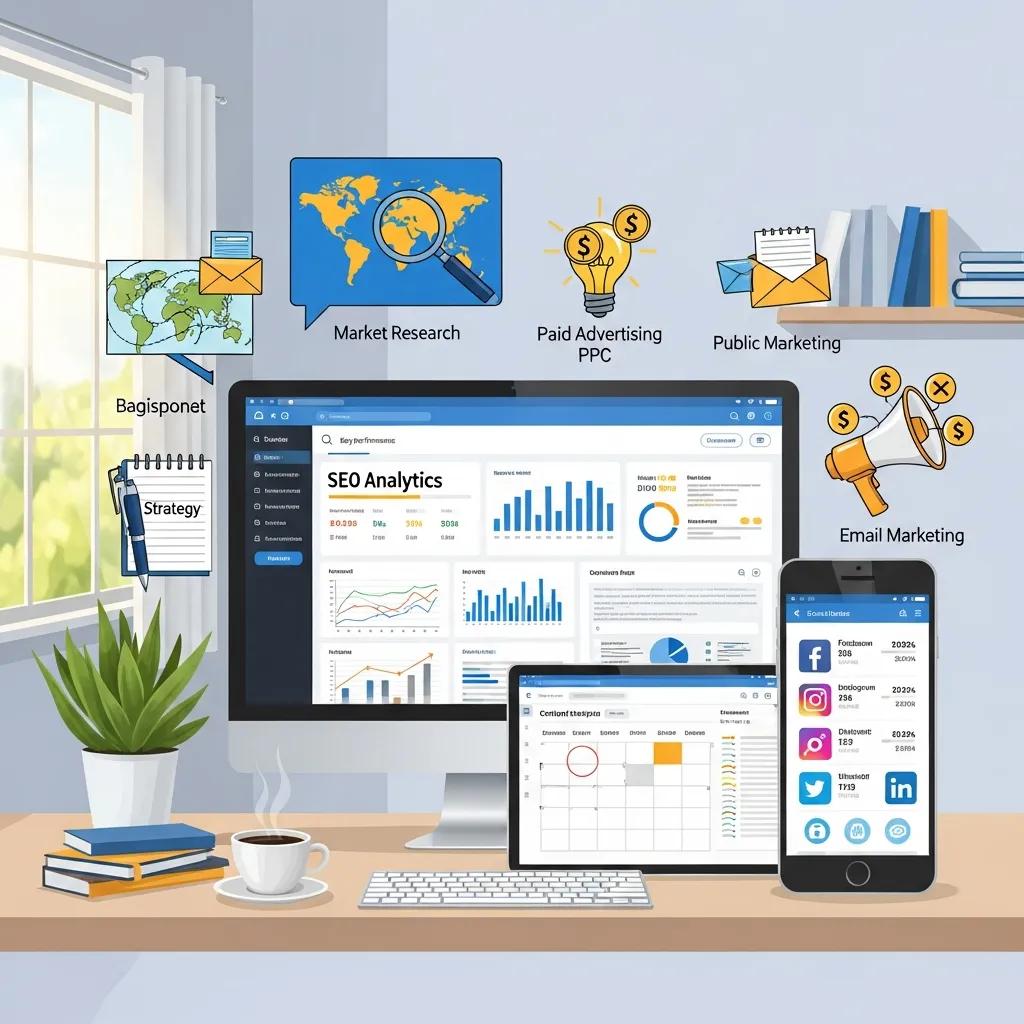
A small business marketing agency typically offers a range of services designed to enhance online visibility and drive growth.
How Does SEO Improve Small Business Online Visibility?
Search Engine Optimization (SEO) is a critical service that helps small businesses improve their online visibility. By optimizing website content for relevant keywords, businesses can increase their chances of ranking higher in search engine results. This increased visibility leads to more organic traffic, which can ultimately result in higher conversion rates. Effective SEO strategies often include keyword research, on-page optimization, technical SEO, and link-building efforts, all aimed at enhancing a business’s online presence.
The strategic implementation of SEO, often alongside Search Engine Marketing (SEM), is crucial for businesses aiming to significantly boost their online presence and competitive edge.
SEO & SEM for Online Business Visibility
Search Engine Optimization (SEO) and Search Engine Marketing (SEM) have become essential components of digital marketing strategies, particularly for businesses aiming to enhance their online visibility and competitiveness in an increasingly saturated digital marketplace. This study explores how SEO and SEM can be effectively implemented to improve a business’s discoverability, brand awareness, and ultimately drive customer engagement and conversions.
The Implementation of SEO and SEM in Digital Marketing Strategy to Increase Online Business Visibility, UE Rohimi, 2024
What Role Do PPC and Social Media Marketing Play in Growth?
Pay-Per-Click (PPC) advertising and social media marketing are essential components of a comprehensive marketing strategy. PPC allows small businesses to gain immediate visibility on search engines and social media platforms by targeting specific audiences with tailored ads. This approach can drive traffic quickly and generate leads. Meanwhile, social media marketing fosters engagement and brand awareness, enabling businesses to connect with their audience on a more personal level. Together, these strategies contribute significantly to overall business growth.
What Is the Client Onboarding Process with a Marketing Agency?

The onboarding process is a crucial step for small businesses when partnering with a marketing agency, as it sets the foundation for a successful collaboration.
Which Steps Should Small Businesses Expect During Onboarding?
During the onboarding process, small businesses can expect several key steps. Initially, there will be an introductory meeting to discuss goals, expectations, and timelines. Following this, agencies typically conduct a thorough assessment of the business’s current marketing efforts and identify areas for improvement. This step is essential for developing a tailored marketing strategy that aligns with the business’s objectives.
How Can Small Businesses Prepare for a Smooth Onboarding Experience?
To ensure a smooth onboarding experience, small businesses should gather necessary documents and information, such as existing marketing materials, brand guidelines, and performance metrics. Setting clear expectations regarding communication and deliverables is also vital. By preparing in advance, businesses can facilitate a more efficient onboarding process and establish a productive working relationship with their agency.
How Do Marketing Agencies Communicate and Report Progress to Small Businesses?
Effective communication is key to a successful partnership between small businesses and marketing agencies.
What Communication Frequency and Channels Are Typical?
Marketing agencies typically establish regular communication channels with their clients, which may include weekly or bi-weekly meetings, email updates, and project management tools. This frequency ensures that both parties remain aligned on goals and progress. Additionally, agencies may use various communication platforms, such as video conferencing and messaging apps, to facilitate real-time collaboration.
Which Key Performance Indicators and Metrics Are Included in Monthly Reports?
Monthly reports are essential for tracking the effectiveness of marketing efforts. Agencies often include key performance indicators (KPIs) such as website traffic, conversion rates, and social media engagement metrics in their reports. These metrics provide valuable insights into the success of marketing strategies and help small businesses make informed decisions about future initiatives.
What Pricing Models and Retainers Should Small Businesses Expect from Marketing Agencies?
Understanding pricing models is crucial for small businesses when selecting a marketing agency.
How Do Retainer and Project-Based Pricing Models Differ?
Marketing agencies typically offer two primary pricing models: retainer and project-based. Retainer agreements involve a fixed monthly fee for ongoing services, providing businesses with consistent support and access to a range of services. In contrast, project-based pricing is based on specific deliverables or campaigns, allowing businesses to pay for services as needed. Each model has its advantages, and the choice depends on the business’s marketing needs and budget.
What Factors Influence the Cost of Marketing Agency Services?
Several factors can influence the cost of marketing agency services, including the scope of services required, the agency’s experience and expertise, and the complexity of the marketing strategy. Additionally, geographic location and market demand can also impact pricing. Small businesses should consider these factors when evaluating potential agencies to ensure they receive the best value for their investment.
How Can Small Businesses Choose the Right Marketing Agency for Their Needs?
Selecting the right marketing agency is a critical decision for small businesses aiming to achieve their marketing goals.
What Criteria Should Small Businesses Use to Evaluate Agencies?
When evaluating marketing agencies, small businesses should consider several criteria, including the agency’s experience in the industry, the range of services offered, and client testimonials. Additionally, assessing the agency’s communication style and responsiveness can provide insights into how well they will collaborate with the business.
Which Questions Are Essential to Ask Potential Marketing Agencies?
Before making a decision, small businesses should ask potential agencies key questions to gauge their suitability. Important inquiries may include:
- What is your approach to developing a marketing strategy?
- Can you provide examples of successful campaigns you’ve executed for similar businesses?
- How do you measure success and report progress to clients?
By asking these questions, small businesses can gain a clearer understanding of how an agency operates and whether they align with their marketing objectives.
Comparison of Key Marketing Services
Different marketing services offer unique benefits and can be tailored to meet the specific needs of small businesses.
| Service Type | Description | Key Benefits |
|---|---|---|
| SEO Services | Optimizing website content for search engines | Increased organic traffic, improved visibility |
| PPC Advertising | Paid ads on search engines and social media | Immediate visibility, targeted audience reach |
| Content Marketing | Creating valuable content to attract and engage customers | Builds brand authority, enhances customer loyalty |
Key Benefits of Partnering with a Marketing Agency
Partnering with a marketing agency can provide small businesses with numerous advantages, including:
- Access to Expertise: Agencies bring specialized knowledge and skills that may not be available in-house.
- Cost-Effectiveness: Outsourcing marketing efforts can be more affordable than hiring full-time staff.
- Scalability: Agencies can adjust their services based on the evolving needs of the business.
These benefits underscore the value of collaborating with a marketing agency to achieve sustainable growth.
Conclusion
In conclusion, small businesses can significantly benefit from partnering with a marketing agency. By understanding the services offered, the onboarding process, communication practices, and pricing models, businesses can make informed decisions that align with their growth objectives. With the right agency, small businesses can navigate the complexities of marketing and achieve their goals more effectively.