

Mastering Agency Selection: Unveiling Hidden Costs and Strategically Choosing Your Ideal Marketing Partner
Navigating the intricate landscape of advertising agencies presents a formidable challenge for businesses, particularly when the true financial commitment is obscured by hidden costs and opaque pricing structures. A profound and comprehensive understanding of these potential expenditures is not merely beneficial but absolutely indispensable for any business aiming to forge a successful and sustainable partnership with the right marketing agency. This definitive guide will meticulously dissect the prevalent pricing models employed by leading advertising agencies, equip you with robust, expert-backed strategies to identify and proactively circumvent hidden costs, highlight essential contract clauses that demand your rigorous scrutiny, offer actionable, data-driven insights for selecting the most suitable agency for your unique needs, and outline proven methodologies to maximize your return on investment (ROI) from your marketing spend. By the conclusion of this authoritative article, you will be thoroughly equipped with the expert knowledge and strategic acumen necessary to make informed decisions, mitigate financial risks, and decisively circumvent common pitfalls in your advertising and digital marketing journey.
Deciphering the Core Pricing Models Utilized by Premier Advertising Agencies
Leading advertising agencies, whether local or national, invariably deploy a diverse array of sophisticated pricing models to bill clients for their specialized services. A thorough comprehension of these distinct models is absolutely fundamental for businesses to not only select the most appropriate agency but also to meticulously budget and allocate their marketing resources effectively for optimal campaign management and superior outcomes.
A Definitive Comparison: Hourly, Project-Based, and Retainer Pricing Models
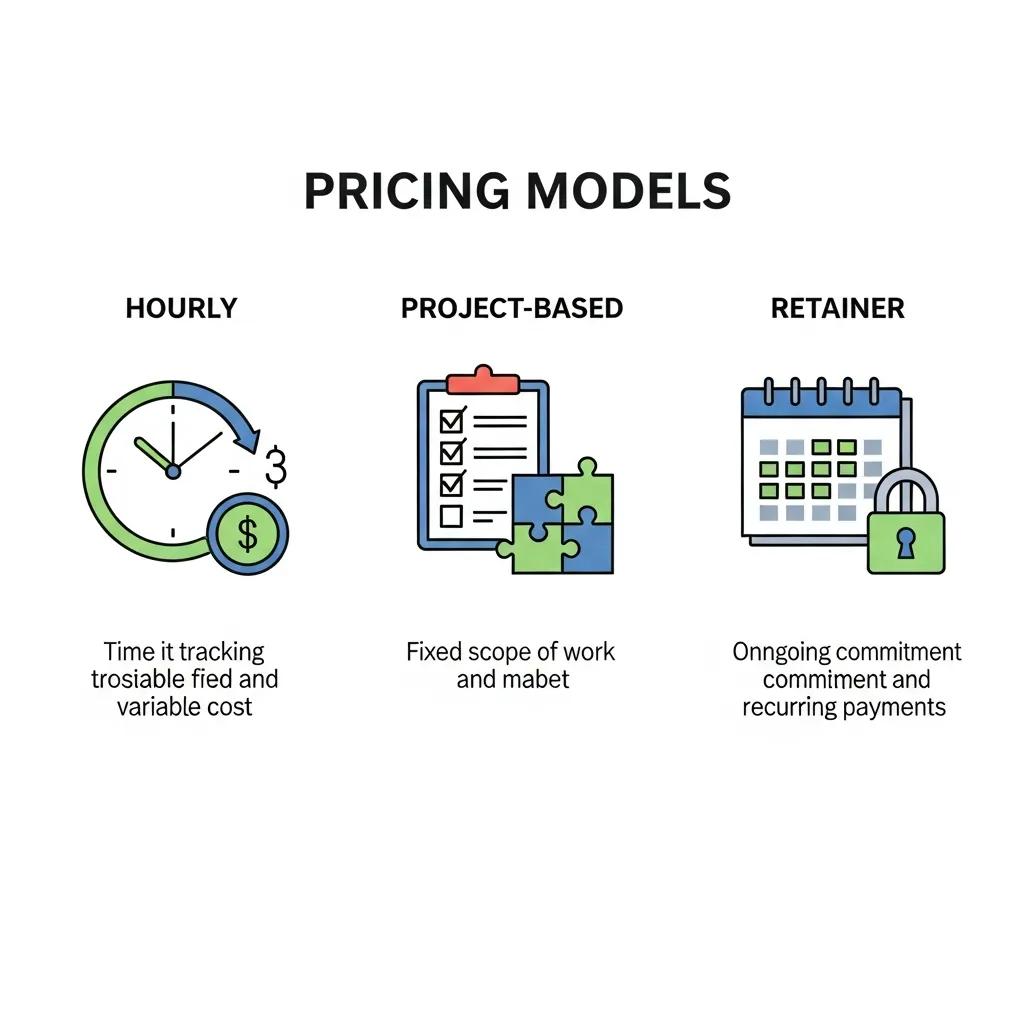
Hourly pricing, project-based pricing, and retainer pricing represent three of the most widely adopted and foundational models utilized by top-tier advertising and digital marketing agencies, each with distinct strategic implications.
- Hourly Pricing: Under this model, clients are charged based on the precise number of hours dedicated by agency personnel to their project. This approach offers considerable flexibility, making it particularly advantageous for projects with evolving or uncertain scopes, such as initial strategy development, ongoing content creation, or specialized consulting services. While it allows for dynamic adjustments, clients must exercise rigorous diligence in tracking hours and ensuring transparent, detailed reporting from the agency to prevent unexpected budget escalations.
- Project-Based Pricing: In this model, agencies provide a predetermined, fixed price for a clearly defined project with specific deliverables and timelines. This approach is highly beneficial for clients who prioritize predictable costs and possess a clear understanding of their project requirements, such as a comprehensive website redesign, a targeted social media campaign launch, or a strategic branding initiative. It offers unparalleled cost certainty but may incur additional charges if the project scope significantly changes mid-way, necessitating precise scope definition upfront.
- Retainer Pricing: Clients engaging in a retainer agreement commit to a consistent, set fee on a regular basis (typically monthly or quarterly) for ongoing, continuous marketing services. This model is meticulously designed to foster a long-term, strategic partnership, ensuring priority access to the agency’s dedicated resources, specialized expertise, and proactive campaign management. It is unequivocally ideal for businesses seeking sustained marketing efforts, such as continuous SEO, comprehensive content marketing, or integrated digital advertising management, providing unparalleled stability and consistent, high-level support.
A nuanced and expert understanding of these differences empowers businesses to select the most suitable pricing model that aligns perfectly with their specific needs, project scope, overarching marketing objectives, and overall budget allocation, thereby optimizing their strategic investment.
Exploring Advanced: Value-Based, Commission, and Performance Pricing Models
Beyond the traditional structures, a growing number of innovative and forward-thinking advertising agencies are offering alternative pricing models that aim to more closely align agency incentives with client success, fostering a true partnership.
- Value-Based Pricing: This sophisticated model sets agency fees based on the perceived or actual value demonstrably delivered to the client, rather than merely the cost of the agency’s time or resources. It necessitates a deep, collaborative understanding of the client’s core business goals and often involves a joint process to define success metrics. This model powerfully aligns the agency’s incentives with the client’s strategic outcomes, such as increased market share, significant lead generation, or enhanced brand equity, making it an exceptionally potent partnership model.
- Commission-Based Pricing: Historically, agencies often charged a commission, typically a percentage, based on the client’s media spend or the sales generated directly from their advertising campaigns. While less prevalent today due due to transparency concerns and the pervasive shift towards digital, this model can still motivate agencies to maximize media efficiency and campaign reach. However, modern businesses often prefer more transparent and predictable fee structures that offer greater control.
- Performance Pricing: Similar in principle to commission-based models, performance pricing directly ties agency fees to specific, measurable performance metrics and key performance indicators (KPIs), such as leads generated, website conversions, customer acquisition costs (CAC), or specific sales targets. This model ensures that clients primarily pay for successful outcomes, making it an exceptionally attractive option for businesses singularly focused on tangible results and a clear return on investment (ROI). It demands robust, verifiable tracking and reporting capabilities from the agency.
These alternative pricing models can provide a higher degree of alignment between agency performance and client business objectives, making them increasingly attractive options for forward-thinking businesses seeking a true strategic marketing partner capable of delivering measurable impact.
Mastering the Art of Identifying and Avoiding Hidden Costs in Advertising Agency Contracts
Hidden costs can stealthily inflate the overall budget for advertising services, transforming an initially attractive proposal into a significant financial burden. Proactively identifying and meticulously avoiding these undisclosed charges is absolutely critical for maintaining stringent financial control and ensuring the long-term viability and strategic allocation of your marketing budget.
Unmasking the Most Common Hidden Fees in Advertising Agency Agreements

Vigilance is paramount when reviewing advertising agency contracts, as several common hidden fees can significantly impact your marketing spend and erode your ROI:
- Setup Fees: These are charges for the initial onboarding processes, account configuration, or proprietary software setup that may not be explicitly itemized or clearly outlined in the primary service agreement. Always proactively inquire about any one-time initiation fees and their justification.
- Revisions and Changes: Many contracts include a limited number of revisions for creative assets or campaign adjustments. Fees for additional revisions beyond this stipulated allowance can accumulate rapidly, especially in dynamic campaigns or creative projects. Clarify the revision policy and associated costs upfront with absolute precision.
- Third-Party Costs: These encompass expenses related to external services or tools essential for campaign execution but often not included in the agency’s core service fee. Examples include stock photography licenses, premium software subscriptions (e.g., CRM, analytics platforms), media buying fees, ad serving costs, specialized font licenses, or even external printing services. Always demand a comprehensive, itemized list of all potential third-party expenditures.
- Administrative or Management Fees: Some agencies may levy separate charges for project management, account management, or general administrative overhead that are not explicitly tied to specific deliverables. These should be scrutinized for transparency and necessity.
- Reporting and Analytics Fees: While basic reporting should be a standard inclusion, some agencies might charge extra for in-depth analytics, custom dashboards, or advanced performance insights. Ensure that all necessary reporting is explicitly covered within the core service agreement.
Being acutely aware of these potential hidden fees empowers clients to negotiate more favorable terms, demand greater transparency, and ultimately avoid unexpected financial outlays that can derail a carefully planned and optimized marketing budget.
Strategic Approaches to Detect and Negotiate Against Undisclosed Charges and Markups
To effectively detect and negotiate against undisclosed charges and markups, businesses must adopt a proactive, meticulous, and assertive approach, grounded in due diligence:
- Demand Detailed Estimates and Proposals: Always insist on a granular, itemized breakdown of all costs in the initial proposal. This should include itemized services, hourly rates (if applicable), estimated time allocations, and a clear, exhaustive list of all anticipated third-party expenses. A vague “all-inclusive” quote should unequivocally raise a significant red flag.
- Clarify All Terms and Conditions: Ensure that all terms related to revisions, additional services, out-of-scope work, and the handling of third-party costs are explicitly defined, understood, and mutually agreed upon within the contract. Ambiguity is the enemy of stringent budget control and can lead to costly disputes.
- Negotiate for Unwavering Transparency: Foster an environment of open, continuous communication regarding pricing and any potential additional costs throughout the entire project lifecycle. Request regular, detailed budget updates and mandate explicit approvals for any expenditure exceeding a predefined threshold.
- Review Invoices Meticulously: Compare every invoice against the agreed-upon contract and detailed estimates with forensic precision. Question any discrepancies or charges that were not previously discussed, approved, or explicitly outlined in the agreement.
- Seek Multiple Bids from Reputable Agencies: Obtaining comprehensive proposals from several agencies allows for a comparative analysis of pricing structures and helps identify outliers or agencies with less transparent, potentially predatory practices. This competitive analysis is a powerful negotiation tool.
By proactively addressing these critical issues during the negotiation phase and throughout the engagement, clients can significantly minimize the risk of encountering hidden charges and ensure their marketing investment is utilized with maximum efficiency and strategic impact.
Essential Clauses to Scrutinize in Advertising Agency Contracts
When meticulously reviewing contracts with prospective advertising agencies, certain clauses are not merely important but absolutely essential to safeguard your business interests, intellectual property, and long-term strategic control, forming the bedrock of a secure partnership.
Critical Contract Terms Protecting Your Data Ownership and Platform Access
Key contract terms that are paramount for safeguarding your valuable data ownership and ensuring unfettered platform access include:
- Data Ownership Clause: This clause is non-negotiable and foundational. It must unequivocally state that the client retains full and exclusive ownership of all data generated during the campaign, including website analytics, customer data, lead information, and campaign performance metrics. This ensures the agency cannot leverage your proprietary data without explicit permission or hold it hostage upon termination.
- Access Rights: The contract must explicitly grant the client comprehensive administrative access to all advertising platforms (e.g., Google Ads, Facebook Business Manager), analytics tools (e.g., Google Analytics), and any other accounts utilized in the campaign. This provision ensures absolute transparency, allows for independent verification of campaign performance, and facilitates a seamless transition if you decide to change agencies.
- Intellectual Property (IP) Ownership: This crucial clause dictates who owns the creative assets developed by the agency, such as ad copy, graphic designs, video content, and campaign strategies. Ideally, the client should retain full ownership and unrestricted usage rights upon payment, ensuring you can reuse or modify these assets independently in the future without encumbrance.
- Confidentiality and Non-Disclosure Agreements (NDAs): A robust, legally binding NDA should be in place to protect your sensitive business information, trade secrets, and strategic plans shared with the agency. This ensures that proprietary information is not disclosed to competitors or used for unauthorized purposes, maintaining your competitive edge.
These clauses are absolutely vital for maintaining complete control over your digital assets, proprietary data, and intellectual property, ensuring a seamless and secure transition should you ever decide to part ways with an agency, protecting your long-term strategic interests.
The Strategic Impact of Termination Clauses and Exit Strategies on Your Agency Relationship
Well-defined termination clauses and comprehensive exit strategies are critical components that can profoundly impact the client-agency relationship, offering essential protection and clarity for both parties, and ensuring a graceful disengagement if necessary.
- Clear Exit Strategy: A meticulously defined exit strategy within the contract allows clients to disengage from the agency relationship without incurring excessive penalties, legal complications, or service disruptions. This should detail the precise process for transferring assets, data, and account access, ensuring business continuity.
- Notice Period: Contracts should specify a reasonable and mutually agreeable notice period for termination (e.g., 30, 60, or 90 days). This provides both parties with adequate time to prepare for the transition, ensuring continuity of services and minimizing potential negative impacts on ongoing campaigns.
- Post-Termination Rights and Responsibilities: Ensure that the contract clearly outlines what happens to all data, creative assets, account access, and outstanding deliverables after termination. This includes explicit provisions for data handover, certified deletion of client data from agency systems, and the transfer of all intellectual property rights.
- Service Level Agreements (SLAs): While not strictly a termination clause, a robust SLA defines the expected level of service, response times, and performance metrics. Failure to meet these standards can sometimes be a legitimate basis for termination or renegotiation, providing an additional layer of client protection and accountability.
A thorough understanding and careful negotiation of these aspects are paramount for clients to navigate the complexities of potentially ending a partnership with an agency gracefully and without undue financial or operational burden, safeguarding your business’s future.
Strategically Choosing the Right Advertising Agency and Avoiding Critical Red Flags
Selecting the ideal advertising agency is a pivotal decision that directly impacts your ability to achieve your marketing goals and drive sustainable business growth. Knowing precisely what to look for, and more importantly, what to unequivocally avoid, can help you circumvent costly mistakes and forge a truly productive, high-impact partnership.
Key Questions to Ask Before Engaging a Marketing Agency
When conducting interviews with potential agencies, a structured approach with incisive, probing questions will yield invaluable insights and reveal their true capabilities:
- “What is your specific, verifiable experience and proven track record with businesses in my industry or niche?”: Understanding their direct expertise with similar clients indicates their ability to grasp your market challenges, target audience, and deliver relevant, effective results. Demand specific, data-backed case studies.
- “Can you provide detailed case studies, compelling client testimonials, or verifiable references from current or past clients?”: Reviewing their past successes, backed by concrete data and client feedback, is the most reliable gauge of an agency’s effectiveness, strategic capabilities, and client satisfaction.
- “How do you definitively define and measure success for a campaign like ours, and what Key Performance Indicators (KPIs) will you rigorously track?”: Knowing their precise metrics for success will help align expectations, ensure absolute transparency, and confirm that their approach is data-driven and singularly focused on your specific business objectives, whether it’s lead generation, brand awareness, or sales growth.
- “What is your typical client onboarding process, and how will communication be meticulously managed throughout our engagement?”: A clear, structured onboarding process and a defined communication plan (e.g., weekly calls, monthly deep-dive reports, dedicated account manager) are crucial for a smooth, productive, and transparent partnership.
- “Who will be the primary, dedicated team members working on our account, and what are their specific qualifications and experience?”: Understanding the expertise and experience of the actual individuals managing your campaigns provides essential confidence in the agency’s capabilities and commitment.
These probing questions will provide invaluable insights into the agency’s capabilities, strategic approach, cultural fit, and overall compatibility with your business’s unique marketing needs and aspirations, empowering an informed decision.
Identifying Critical Red Flags That Indicate a Potentially Unsuitable Marketing Agency
Vigilance is paramount. Be acutely aware of these critical red flags when evaluating prospective agencies, as they often signal underlying issues that could lead to a problematic, costly, and ultimately unproductive partnership:
- Lack of Transparency: If an agency is reluctant to openly share their processes, detailed pricing structures, granular campaign performance data, or provide direct administrative access to advertising accounts, it may unequivocally indicate hidden costs, inefficient practices, or a fundamental lack of confidence in their own work. Transparency is the bedrock of trust and accountability.
- High Employee Turnover: Frequent staff changes within an agency can severely disrupt campaign continuity, lead to inconsistent service quality, and necessitate constant re-education of new account managers about your business and objectives. This often points to internal management issues and a potentially unstable environment.
- Vague or Overly Simplistic Contracts: Contracts that lack clarity, omit crucial details, or are excessively brief may lead to significant misunderstandings, scope creep, and costly disputes down the line. A comprehensive, meticulously detailed contract protects both parties and defines the boundaries of the engagement.
- Guaranteed Results or Unrealistic Promises: Be extremely wary of agencies that guarantee specific, often exaggerated results (e.g., “guaranteed #1 ranking on Google” or “double your sales in 30 days”). Ethical and competent agencies understand that marketing involves numerous variables and can only promise best efforts, strategic execution, and data-driven optimization, not absolute, unattainable outcomes.
- Poor Communication During the Sales Process: If an agency is slow to respond, provides unclear or evasive answers, or seems disorganized during the initial vetting phase, it is a strong, predictive indicator of how they will manage your account once you become a client. Inconsistent communication is a critical warning sign.
Identifying these warning signs early in the selection process can save your business from significant financial losses, wasted time, and considerable frustration, ensuring you choose a truly reliable, effective, and trustworthy marketing partner.
Strategies to Maximize ROI and Performance with Your Advertising Agency
Achieving maximum return on investment (ROI) and sustained, superior performance from your advertising efforts requires more than just hiring an agency; it demands a strategic, collaborative, and data-driven approach to working with your chosen marketing partner, fostering a true synergy.
The Imperative of Setting Clear Objectives and Measurable KPIs with Your Agency
Establishing clear, quantifiable objectives and measurable Key Performance Indicators (KPIs) from the outset is absolutely essential for rigorously tracking progress, definitively evaluating success, and ensuring unwavering accountability in your agency partnership.
- Define Specific, Achievable Goals: Clearly articulate what you unequivocally aim to achieve with your marketing campaigns. Goals should be SMART: Specific, Measurable, Achievable, Relevant, and Time-bound. Examples include “increase website traffic by 20% in six months,” “generate 50 qualified leads per month,” or “improve brand engagement on social media by 15%.”
- Identify Relevant, Actionable KPIs: Choose KPIs that directly align with your defined goals and provide actionable, strategic insights. For website traffic, KPIs might include unique visitors, bounce rate, and time on page. For lead generation, focus on conversion rates, cost per lead (CPL), and lead quality. For brand awareness, consider reach, impressions, and social media engagement rates.
- Establish Baseline Metrics: Before launching any campaign, meticulously understand your current performance levels. This baseline provides a critical, objective benchmark against which future results can be measured, definitively demonstrating the true impact and value of the agency’s efforts.
- Schedule Regular, Rigorous Performance Reviews: Implement a consistent schedule for reviewing campaign performance with your agency (e.g., weekly check-ins, monthly deep dives). These meetings are crucial for assessing progress, discussing challenges, and collaboratively adjusting strategies as needed to optimize results and ensure continuous improvement.
By maintaining an unwavering focus on clear objectives and data-driven KPIs, you can ensure that your agency’s efforts are precisely aligned with your overarching business goals, driving tangible, measurable, and impactful results.
Why Continuous Optimization and Transparent Reporting Are Critical for Sustained Success
Continuous optimization and transparent, comprehensive reporting are not merely best practices; they are fundamental, indispensable pillars for achieving long-term success and maximizing the enduring value of your partnership with an advertising agency.
- Data-Driven Decisions and Adaptability: Regular, detailed reporting allows for in-depth data analysis, transforming raw numbers into actionable, strategic insights. This enables informed decisions about campaign adjustments, budget reallocation, and strategic pivots, ensuring that your marketing strategies remain effective, responsive, and agile in a constantly evolving market landscape and competitive environment.
- Proactive Campaign Optimization: Continuous optimization involves ongoing testing, refinement, and enhancement of campaign elements (e.g., ad copy, targeting, landing pages, bidding strategies). This iterative process, driven by performance data, is crucial for improving efficiency, reducing costs, and maximizing ROI over time. An agency committed to optimization will actively seek out new opportunities for improvement and innovation.
- Fostering Unwavering Accountability and Trust: Transparent reporting builds a foundation of trust and fosters absolute accountability. When an agency provides clear, honest, and regular reports on campaign performance, budget utilization, and challenges, it demonstrably proves their commitment to meeting objectives and delivering results. This open communication ensures that the agency is held responsible for its commitments and that clients have a clear, unambiguous understanding of their investment’s impact.
- Strategic Partnership Evolution: With continuous optimization and transparent reporting, the client-agency relationship evolves into a true strategic partnership. Both parties work collaboratively, leveraging data to refine strategies, explore new opportunities, and collectively drive towards shared business growth objectives, ensuring a dynamic and productive alliance.
Emphasizing these critical aspects will lead to a more productive, efficient, and ultimately successful partnership with your advertising agency, ensuring your marketing investment yields the highest possible returns and contributes significantly to your business’s strategic growth.
| Pricing Model | Description | Pros | Cons | Best For |
|---|---|---|---|---|
| Hourly Pricing | Charges based on hours demonstrably worked by agency staff. | Highly flexible, ideal for uncertain scopes, specialized consulting, content creation. | Can lead to unpredictable costs, demands diligent time tracking and transparent reporting. | Projects with evolving requirements, exploratory phases, specific consulting tasks. |
| Project-Based Pricing | Fixed price for a specific, clearly defined project with explicit deliverables. | Predictable costs, clear deliverables, absolute budget certainty. | May not easily accommodate scope changes, less flexible for ongoing needs. | Website redesigns, specific campaign launches, strategic branding projects. |
| Retainer Pricing | Regular, set fee (monthly/quarterly) for ongoing services and priority access. | Fosters long-term strategic relationship, priority access to resources, consistent support. | Requires commitment without immediate need, may feel less flexible for one-off tasks. | Continuous SEO, comprehensive content marketing, integrated digital advertising management. |
| Value-Based Pricing | Fees based on the perceived or actual value demonstrably delivered to the client’s business. | Powerfully aligns agency incentives with client success, focuses on strategic outcomes. | Requires clear definition of value, can be complex to quantify upfront. | High-impact strategic initiatives, brand building, significant market share growth. |
| Performance Pricing | Fees tied directly to specific, measurable performance metrics (e.g., leads, sales). | Clients pay for successful outcomes, strong motivation for agency to deliver results. | Demands robust tracking, metrics must be clearly defined and mutually agreed upon. | Lead generation campaigns, e-commerce sales, direct response marketing. |
| Hidden Fee Type | Description | Potential Impact on Budget | Mitigation Strategy |
|---|---|---|---|
| Setup Fees | Initial charges for onboarding, account configuration, or proprietary software access. | Can significantly increase overall project costs, especially for new clients. | Request itemized breakdown, negotiate inclusion in overall fee, clarify upfront. |
| Revision Fees | Charges for additional creative or campaign revisions beyond contract allowance. | May lead to unexpected expenses, especially in dynamic projects. | Clarify revision policy, negotiate higher revision limits, define scope clearly. |
| Third-Party Costs | Expenses for external services like stock media, software, ad serving, or printing. | Can significantly inflate the total marketing budget if not itemized. | Demand a comprehensive list of all potential third-party costs, approve all external spend. |
| Administrative/Management Fees | Separate charges for project management, account management, or general overhead. | Adds to overall cost without direct deliverable, can be opaque. | Inquire if these are included in core fees, negotiate for transparency. |
| Reporting & Analytics Fees | Extra charges for in-depth reports, custom dashboards, or advanced insights. | Can increase ongoing costs for essential performance monitoring. | Ensure basic and advanced reporting is included in core service, clarify reporting frequency. |
| Essential Contract Clause | Purpose | Critical Importance for Client | Key Considerations |
|---|---|---|---|
| Data Ownership Clause | Specifies client retains full and exclusive ownership of all campaign-generated data. | Ensures absolute control over proprietary data, prevents agency from leveraging it without permission. | Must be explicit, cover all data types (analytics, leads, customer data). |
| Access Rights | Grants client comprehensive administrative access to all platforms and accounts used. | Promotes transparency, allows independent verification, facilitates seamless transitions. | Specify platforms (Google Ads, FB Business Manager, Analytics), level of access. |
| Intellectual Property (IP) Ownership | Determines who owns creative assets (copy, design, video) developed by agency. | Ensures client can reuse/modify assets independently, protects brand assets. | Client should retain full ownership upon payment; clarify usage rights. |
| Confidentiality/NDA | Protects client’s sensitive business information and strategic plans. | Prevents unauthorized disclosure to competitors, safeguards trade secrets. | Must be robust, legally binding, and clearly define confidential information. |
| Termination Rights & Exit Strategy | Outlines conditions for ending agreement, precise process for disengagement. | Protects client from unfavorable terms, ensures smooth transition of assets/data. | Specify notice period, data handover process, post-termination responsibilities. |
| Service Level Agreements (SLAs) | Defines expected service levels, response times, and performance standards. | Ensures agency meets agreed-upon quality and responsiveness, provides basis for accountability. | Include specific metrics, response times, and potential remedies for non-compliance. |